• In the Kingdom: Jesus Is Lord!
  • Knowing Your Eternal Destiny
  • Three Components of Every Spiritual Battle
  • Top Ten Ways to Know You’re Growing
  • Why This Blog?

eisakouo

~ "Only by hearing will you hear"

eisakouo

Tag Archives: Jesus

Turning Bad Into Good

26 Thursday Sep 2013

Posted by eisakouo in Luke, Our Spiritual Process

≈ Leave a comment

Tags

absence of bad, agathos, all things are not good, believing in God's goodness, God allows evil to exist, good, good originates with God, how can we believe God is good, Jesus, Romans 8:28, worshipping ourself
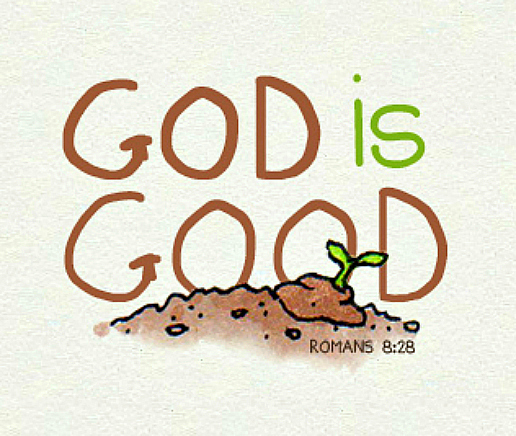
 

God Is Good


Have you ever heard someone comment, “How can God be good when thousands are killed in disasters and tragedies everyday. I can’t believe in a God who would allow situations like this to happen.”

Let’s say they are right in their observation… and God isn’t good. Let’s take it one step further and say God doesn’t exist. Thousands of people are still going to die tomorrow from tragedies, accidents, and disasters. Blaming God or getting rid of Him doesn’t solve the problem.

How do we answer the dilemma?  If God is good, why do bad things happen?

The answer is – If an event isn’t good, then it didn’t have its source in God. In other words, He didn’t author it.  Yes, God is totally sovereign and He is in control. God allows bad things to exist in our world for reasons we will never be able to fully understand. Our problem is we use the wrong standard for goodness. People use their own standard for what is good and bad. Good is whatever is personally good for them and the world in which they live. When we blame or accuse God for the bad in the world we are basically saying, “I know better than God and my standard for goodness is higher than His.” Are you going to believe in God only if He acts like you want Him to act? You would be better off carving a god out of a piece of wood or chipping one out of a rock.

Many today have become their own standard for goodness. In essence, they are worshipping themselves and their own standards. Once this happens we will never be able to discern the true source of good and bad. We will remain blind.

As I was saying in the previous blog, the proof of goodness cannot be discovered in our experience or circumstance. Good can only be discovered by going to the source. God’s goodness doesn’t mean that bad things will not happen to you. We live in a bad, evil world. Jesus even warned His disciples that even more bad things would happen to them because they were followers of Him. So the absence or presence of bad doesn’t prove or disprove anything. The only ones who struggle over this issue are those who refuse to come under the Lordship of Jesus Christ.

The good news is found in knowing that God is good. He promises to take the very worst life has to offer, if we let Him, and create eternal good from it.


And we know that God causes all things to work together for good to those who love God, to those who are called according to His purpose.  Romans 8:28


This verse doesn’t say “all things are good“. All things are not good, but God can cause “all things to work together for good.” When we allow God to set the standard for good, then it doesn’t matter what happens. Circumstances and situations may get extremely difficult for us. But God’s goodness can be discerned even in the middle of evil situations.

I don’t always know what “good” God has in mind when He allows tragedy, heartache, and disappointments to come into our lives. But I am not in charge and I am not God. I can ask Him and He may answer. But I am not in charge and I may never know. My job is to trust in the Lord’s leadership. I have discovered that the worst thing to do in difficult circumstances is to consult other people before I consult the Lord.

Romans 8:28 reminds us all of what we need to know. “God causes all things to work together for good.” I may not be able to see how God is working for good… I may not be able to feel God working for good… I may not even understand how God could work out some terrible situations for good. If God says He will, then He will. It is His job. My job is to continue to love Him and stay in my calling as His child. God always knows what is best.

The greek word for good is agathós.  It means what is inherently (intrinsically) good; as to the believer. Agathós describes what originates from God and is empowered by Him in their life, through faith.

Did you catch this? If we cannot intrinsically believe God is good, all the time, everywhere, in everybody, and especially towards us personally… then how can we ever, ever, ever pray and believe in faith towards Him. We cannot! Believing in the goodness of God is an absolute necessity. If you want to radically change your prayer life today, set God as your permanent standard for goodness. You will see Him and His Kingdom in a whole new light.


Blessings – From God’s Incubator,

Pastor


Share this:

  • More
  • Click to email a link to a friend (Opens in new window) Email
  • Pocket
  • Click to print (Opens in new window) Print
  • Tweet
  • Click to share on Reddit (Opens in new window) Reddit
  • Share on Tumblr
Like Loading...

God Is the Standard for Goodness

25 Wednesday Sep 2013

Posted by eisakouo in Luke, Our Spiritual Process

≈ Leave a comment

Tags

being able to process good, belief system, Charles West quote, discerning good and bad, experiences and circumstances, foundations are shaking, James 1:17, Jesus, knowing our source, Luke 18:18, Matthew 19:16-17, only good comes from God, prayer, rich young ruler, spinach and chocolate, the good life


Foundations are shaking


Did Jesus really mean that no one is good but God alone?  I think He did. This means that no one, absolutely no one knows what is good, and conversely no one knows what is bad… outside the Lord telling them. Yet we hear people inform us of what is good and bad all the time.  People say, “So-in-so is bad and so-in-so is good. Why doesn’t God do something about ______ bad things and why doesn’t He do more _____ good things.”

If believers are not careful they will even fall prey to thinking and speaking like this. Eventually, not discerning good from bad will affect your belief system.


What if I told you that you personally don’t know good from bad, would you believe me?


 What Is Actually Good? 

How then do we determine what is “good” … and what isn’t “good”?  You probably already have a belief system in place to process goodness. The best way to know goodness is to use Jesus’ system.


And someone came to Him and said, “Teacher, what good thing shall I do that I may obtain eternal life?” 17 And He said to him, “Why are you asking Me about what is good? There is only One who is good; but if you wish to enter into life, keep the commandments.”    Matthew 19:16-17


Jesus wanted this rich young ruler to teach Him the standard of good. The young seeker was like most people. He thought the good life consisted of good things, good circumstances, and good feelings. In other words… if it was good to him personally, then it was good. He had been earnestly keeping most of the Ten Commandments from his youth. Like most people I know, he thought by keeping these good commandments he was good enough for heaven.

According to Jesus – Good is defined by source (God) not by experience.  Follow my logic here. Anything that is good, comes from God because God is good. If it is not from God, then it isn’t good. If something isn’t good, then it didn’t come from God. It doesn’t matter how good it looks… how good it feels… how good it tastes …. if it doesn’t come from God, then it isn’t good.  Also, if it isn’t good, then it didn’t come from God.  Can you agree?

Most of us can look at these last statements and understand that this is how it ought to work. The Bible says, “God is good.” Jesus confirms God is good… Therefore, only good can come from Him. But, our experience and circumstances betray how we really process goodness.  This is how we really process goodness.

Spinach didn’t come from God but chocolate did. There will be no spinach in heaven. Spinach is a result of the fall of man. It is a part of the curse God placed upon the ground. As a result, people in hell will eat spinach and people in heaven will consume boat loads of chocolate.  How did I come to this conclusion?  I am being facetious of course, because I don’t like spinach. In fact, I might even be allergic to it. Conversely, I love chocolate… all chocolate. It is good. It tastes good and it feels good in my mouth. In fact, I love just about all things dipped in the stuff. The truth is (as much as I hate to admit it) spinach is good for you. It even provides a spiritual lesson for us today.

Here is the point: Good is not determined by experience, it is only discerned by discovering it’s source.  I may have had a bad experience with spinach, turnips, and cauliflower but that doesn’t determine whether they are good or bad. Goodness is determined by its Creator, not by any experience. In reality, chocolate tastes good all the time. Chocolate makes me feel good in limited quantities. In fact, chocolate has a soothing attribute about it which makes many people happy, happy, happy.  But a steady diet of only chocolate wouldn’t be good for me.  Why? Experience is not the gold standard for goodness.

Likewise, you can never determine whether what you are going through is either good or bad by how you feel or by what you are experiencing…. never!  If feelings, experience, and circumstances are your guides you will miss goodness every time.  The only way to know whether something is good or bad is by knowing who authored it.

Paul and Silas were in jail. Peter and John found themselves in jail too. By all objective assessments, jail was bad.  But no… they considered it good and rejoiced.  This explains why most believers simply collapse in trying circumstances… they are only looking for a chocolate experience.

This is why most believers do not know how, why, and what to pray for in difficult circumstances. They pray for “bad” things (chocolate) and neglect praying for God’s “good things” (spinach).   They never take time to discern something’s source.


Every good gift and every perfect gift is from above, and cometh down from the Father of lights, with whom is no variableness, neither shadow of turning. James 1:17


Every good thing has God as its source. God only produces that which is good. We might use it for a bad purpose (marijuana, cocaine, alcohol) … but goodness is determined by its source, not by experience.

Today, ask God if what you are going through is from Him. Stop attempting to discern your circumstances and problems. Our call as believers is to discern the Lord and the Lord’s will. Psychics and mediums strive to interpret circumstances. Believers seek the Lord. Only the Lord can teach us whether something is good or bad. He also knows how to take the bad in life and make something good out of it.  More on this next time.


Blessings – From God’s Incubator,

Pastor


Share this:

  • More
  • Click to email a link to a friend (Opens in new window) Email
  • Pocket
  • Click to print (Opens in new window) Print
  • Tweet
  • Click to share on Reddit (Opens in new window) Reddit
  • Share on Tumblr
Like Loading...

Is God Really Good? 

24 Tuesday Sep 2013

Posted by eisakouo in Luke, Our Spiritual Process

≈ Leave a comment

Tags

bad things happen, basic lessons of life, calling God good, clearer picture of God, complaining, discerning good and bad, doubting the goodness of God, goodness of god, Jesus, Luke 18, only seeing bad, opinion of God, Plutarch quote, reality check, reason prayer fails, rich young ruler, suffering, thankful, tragedies


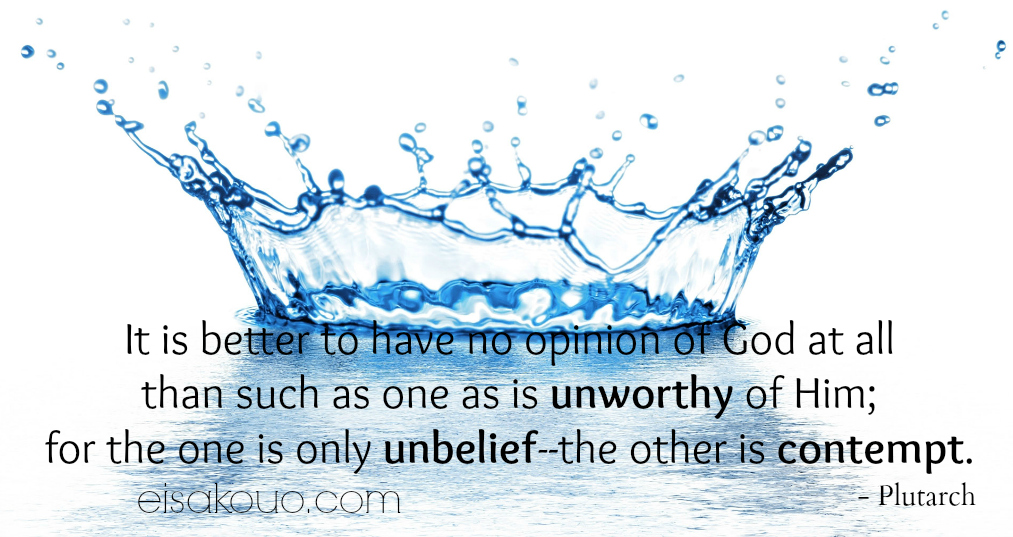
No Opinion of God


A young man tried to call Jesus “good” one day. We don’t know his motivations. Maybe he was flattering the Lord or maybe he honestly saw Jesus as being good. Jesus didn’t let the compliment sit. He corrected him. In all of Jewish history no rabbi was ever called “good“.  This title was reserved for God and God alone. In the English language “good” and “God” are interchangeable. It is the extra “o”.

Jesus wanted to know why the young man called Him “good.” Jesus has a way to get to the heart of any issue. I don’t think Jesus was denying His Deity… He simply wanted this young man to give further thought on what he just said. Have you ever called something “good”, but knew in the moment you were making an over-exaggeration? The noun good in modern vocabulary gets tossed around far too often. It really doesn’t mean much anymore. Jesus was basically saying, “If you want to call Me good, then you must be willing to call Me God. If you will not call Me God, then you can’t call Me good!”  In other words for Jesus, knowing God as being truly good was serious business. Jesus knew if a person knew God, they also knew good. If a person couldn’t discern good, it meant they didn’t know God.


In your estimation… has God always been good to you?  Are you willing to call Him good, right now, in all things?


The “goodness” of God is one of the first and basic lessons we learn.  Unfortunately, it doesn’t stick to us throughout our life.  We have to relearn this lesson time and time again… I know I have had to start over. Your first prayer over meals was probably something like this… “God is great, God is good, let us thank Him for our food.” Did you ever learn the chorus: “God is so good, God is so good, God is so good, He’s so good to me?”

We are told things like this as children and then the hard realities of life kick-in and we begin to wonder if God is really good. The Bible constantly reminds us of God’s goodness. But just because the scriptures speak of something often, doesn’t mean it seeps down into our innermost being.

Here is the point… Continually being able to discern God’s goodness can prove to be difficult for many people. Sometimes we don’t see, detect, or even discern the goodness of God in certain situations, especially when something bad happens to us personally.  When we experience a heartache, a tragedy or disappointment … it appears as though God isn’t so good. Why? Good is not happening to me!

  • If God is so good, then why do tragedies happen?  
  • If God is so good, then why did my dad die of cancer or my mom develop Alzheimer’s? 
  • If God is so good, then why is there so much suffering in the world, right now? 
  • If God is so good, then why do bad things happen to “good” people?  
  • In fact, why does bad even have to exist?

Let me say, it is easy to see bad. I can have a thousand good things happen to me in one day and only focus upon the one bad problem. As I type this blog, it is 77 degrees and feeling nice… but I know I haven’t thanked the Lord for any of the good things He has given me today. Part of our problem is we spend too much of time complaining about the bad things around us and never spend a nanosecond  thanking the Lord or rejoicing over the good we know He provides. If you are one of those people who can only discern the “bad” issues of life, you have larger issues which need addressing. True discernment detects both good and bad… and discerns the source.

I am going to discuss this more in my next blog but if you struggle with discerning the good and bad of life… maybe it is time to start over and get a clearer picture of God. You need an update! Your files have become corrupted. If the Bible is correct and God is indeed good, then no one can know true good without Him. He is our definition. He is our compass. He is our Northern Star. If we don’t know Him or understand Him, then we cannot truly know what is good. If we don’t really understand good, then we cannot detect bad either.  Sound crazy?  Stick with me because I believe this is one of the major reasons most believers don’t get immediate answers to their prayers…. they inwardly doubt the goodness of God.  Yeah, Yeah… they say God is good, they sing it, and they even speak and teach it. The problem is …. inwardly they doubt it!  In other words, they don’t believe in a good God.  Nothing will cause your prayer life to sink, stink, or come to a crashing halt like doubting the goodness of God.

Hey, you either pray to a good God or you don’t. It is this cut and dry. More next time.


Blessings – From God’s Incubator,

Pastor

Share this:

  • More
  • Click to email a link to a friend (Opens in new window) Email
  • Pocket
  • Click to print (Opens in new window) Print
  • Tweet
  • Click to share on Reddit (Opens in new window) Reddit
  • Share on Tumblr
Like Loading...

Attempting to Appease God

23 Monday Sep 2013

Posted by eisakouo in Luke, Our Spiritual Process

≈ Leave a comment

Tags

a Pharisee by nature, bad, black and white, do's and don'ts, horizontal commandments, Jesus, John 5:39, keeping the law, Luke 18:18, negative boundaries, negative law, positive law of love, releasing our possessions, religion, religion verses a relationship, sin, the rich young ruler, the Ten Commandments, vertical commandments


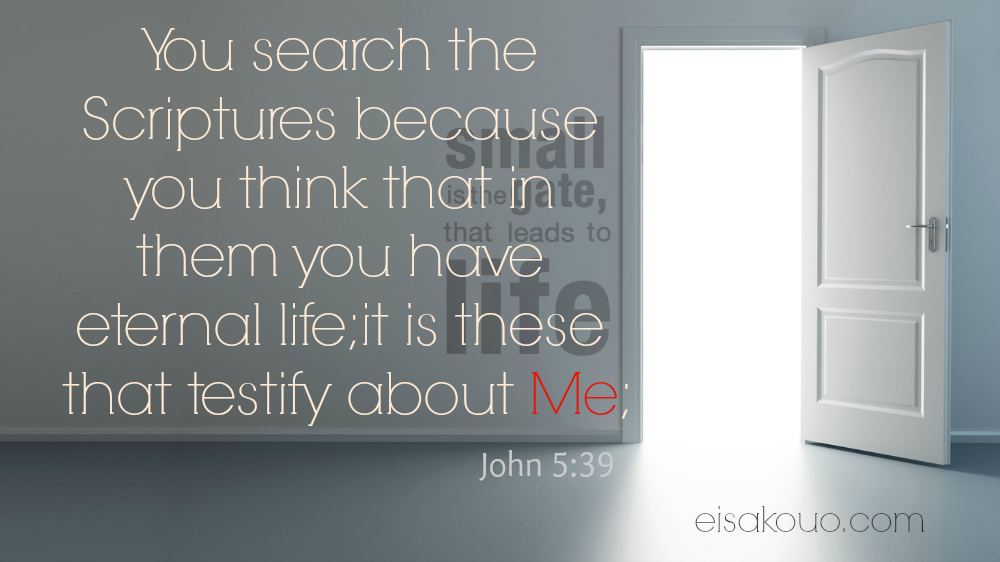
You search the Scriptures


A ruler questioned Him, saying, “Good Teacher, what shall I do to inherit eternal life?”  Luke 18:18


This young ruler didn’t ask Jesus what “bad thing” or “bad sin” he needed to stop doing in order to get into heaven. He asked Jesus about what he needed to do next to ensure he inherited eternal life.  But Jesus met this young man on the grounds of the Ten Commandments. In fact, Jesus only mentioned five. Jesus alluded to all the horizontal commandments (commandments directed toward men)… but He didn’t mention the vertical commandments (commandments directed toward God).

Isn’t this what most people think about God, the Bible, and salvation. They believe it is mostly composed of a list of “do’s and don’ts“. Most are somewhat familiar with these lists and know which ones they have broken and which ones they have kept, even from a young age.

“Ah ha,” the young man replied, “I have already stopped doing all those wrong things. What else have You got good teacher?” He must have thought Jesus was letting him off the hook by only mentioning 5 of the 10 commandments. Lucky day!

Jesus said, “Well, if you are really serious about this whole business, if you really want to be perfect, why don’t you go out and sell what you have and fully serve your neighbor.” This response shocked the rich young ruler. He was expecting more negatives from the Lord… maybe even some new commandment… something exotic which no one else was performing.  He wasn’t let off the hook, he was pierced through the heart!

Jesus had directed the young man to search beyond the negative law to the positive law of love. This was, of course, more than the young ruler was ready to commit. Jesus knew by releasing his possessions (which had a grip on his heart) that this would cover all the commands and assure the young man a relationship with God.

This young ruler is like most people. He felt relatively comfortable with the negative law. We expect a certain negativity from “religion.” Religion is constantly watching and on-guard.  Religion has laws which keep everybody in-line.  Knowing where the line of black and white flows is a comfort. We can walk right up to it and continue to feel relatively safe.

The young man was good at not doing this and not doing that, but he was not ready for the unlimited reach of God’s love into every area of his life. By simply releasing his possessions… he would have been giving God everything and the Lord would have been able to give him everything in return.

I am personally uncomfortable with this whole concept of being a Christian as Jesus explained it. I am a Pharisee by nature. Most people are as well, whether they admit it or not.  We are more comfortable and content with the negative approaches to keeping the law and following religion…  because we like to know where the limits are. The scales are either tipped our way or they are not.

  • The negative boundaries remind us of when we are coloring outside the lines.
  • They remind us of when we go beyond the speed limit.
  • They remind us of where the dangers lie.
  • We all feel more comfortable when we can see the extent of our obligations and also understand where others are in their walk… because we love to compare!

Unfortunately, the young man walked away. He is the only person who ever came to Jesus seeking help and walked away in worse condition than when he first arrived. Thankfully our story doesn’t have to end like the young ruler. Jesus didn’t offer His life so that we might further follow a religion. He gave Himself so that we might have a relationship with Him. The choice is always ours.

Blessings – From God’s Incubator, 

Pastor
Share this:

  • More
  • Click to email a link to a friend (Opens in new window) Email
  • Pocket
  • Click to print (Opens in new window) Print
  • Tweet
  • Click to share on Reddit (Opens in new window) Reddit
  • Share on Tumblr
Like Loading...

Kingdom Awareness

29 Thursday Aug 2013

Posted by eisakouo in Kingdom of God, Luke

≈ 2 Comments

Tags

Abraham, Adam and Eve, Elijah, Exodus 3:2-5, hearing God's voice, Jacob, Jesus, John 19:10-11, kingdom of God, Luke 17:20-21, miss God's will, Moses, physical signs, Rome, signs, spirituality

Bride Not Harem

The kingdom of God is not coming with signs to be observed; nor will they say, ‘Look, here it is!’ or, ‘There it is!’ For behold, the kingdom of God is within you.  Luke 17:20-21

Jesus said people miss out on what God is doing in and around them because they fail to detect or discern what the Lord desires to accomplish in them personally.   In this verse Jesus calls His followers to become Kingdom Aware.

So are you Kingdom Aware?  Are you looking for the Lord to work outside you or inside?  When we are looking for the Lord’s action some other place rather than inside ourselves, we will probably miss the Lord’s movements.  I wear glasses.  Occasionally, I misplace them and go searching for them.  In desperation, I will finally ask my wife… “Have you see my glasses?”  She will give me one of those looks and say… “They are on top of your head!”  It is embarrassing.  It must have been embarrassing for Jesus’ followers to hear Him say, “Stop looking and expecting the Kingdom of God to arrive with physical signs…The Kingdom of God is within you.”   Jesus could have said, “Hey, stupid… the Kingdom is starring you in the face… can you feel me now?”  Jesus is, was, and will continue to be a perfect gentleman.

The major focus for Jesus was the Kingdom of God. It still is! The power of Rome and its occupying force was hardly a blip on the radar for Jesus, even though it was foremost in the minds of almost everyone else.  Jesus wasn’t concerned with the power of Herod, the Jewish leaders or even Pilate.  In fact, when Jesus was being questioned by Pilate at His trial, Pilate said to him, “Do you refuse to speak to me? Don’t you realize I have power either to free you or to crucify you?” Jesus answered, “You would have no power over me if it were not given to you from above” (John 19:10-11).

Jesus’ focus was not on the power of the government, but on the power of God. He stood before Pilate in complete confidence. What was it that freed Jesus from fear and gave Him such confidence? It was the constant awareness of the presence of the kingdom of God. The same Kingdom that ruled and reigned in Jesus’ heart and life should be ruling and reigning in ours as well.

Unfortunately, we miss Kingdom’s movements all the time.  Most of our favorite Bible characters did too.  It started in the garden with Adam and Eve. God told the first couple they could do anything they wanted and eat anything they wanted except for one small item.  As soon as they thought God was off somewhere snoozing, they proceeded to make a dinner of the forbidden fruit.  They acted as if God didn’t exist anymore.  Because God was absent, His presence didn’t seem to appear as important. Bottom-line, the first couple didn’t value the Presence of God or His Kingdom.

God broke into the world of both Abraham and his son.  He made special promises to both generations.   Apart from these special visitations, they seem to be unaware that the Lord was continually with them.  It was mainly during down times of testings and trials in which they doubted God’s word and forgot His promises.

Abraham’s grandson, Jacob was on the run when God spoke to him in a dramatic way.  While he was sleeping, the Lord revealed to him that earth and heaven were not two separate places, but connected. Jacob saw a ladder connecting heaven and earth with angels traversing in between. Jacob called the place “Bethel”, which means “house of God.”  He was partly correct.  God did live there, but He also lived everywhere.  This dream was not a once-in-a-lifetime occurrence…. it was an eternal truth about the Presence and Kingdom of God.  The Kingdom of God is always waiting to be discovered by seekers.  Bethel was not an unusual experience for one man way back in history, but a reality for every person, in every place, in every time. How many of us have had times when God’s presence broke through into our everyday lives?  These experiences should have made us want more of God and His Kingdom.

I have had Bethel type experiences in prayer or when reading the Scripture, and I have had them when I least expected it. The point is, God is always trying to break through our world, if we will only be aware of Him. I believe God had been attempting to speak to Jacob many times earlier in his life, but he was not ready to experience Him.  It was only until Jacob became desperate enough and needed the Lord that the Lord was able to capture his heart.

At first Moses tried to force the Kingdom of God into action and killed a man in the process. It was not until Moses had spent a long time away from Egypt, and came to the point of desperation that he was ready for God to speak to him.

The Bible says, “There the angel of the Lord appeared to him in flames of fire from within a bush. Moses saw that though the bush was on fire it did not burn up… When the Lord saw that he had gone over to look, God called to him from within the bush, ‘Moses! Moses!’ And Moses said, ‘Here I am.’ ‘Do not come any closer,’ God said. ‘Take off your sandals, for the place where you are standing is holy ground” (Exodus 3:2-5).

I believe that every place can be holy ground, and the only thing that keeps us from experiencing God is our willingness and readiness to experience Him.

Elijah may offer the best example of how the Kingdom of God should move in our life.  Elijah knew and experienced the power of God. He had witnessed God consume the sacrifice on Mount Carmel.  Immediately following this great victory, Queen Jezebel sought to kill him.  Feeling dejected and depressed Elijah ran. At this point he desperately needed a word but couldn’t get one from the Lord.

  • God sent a great a powerful cyclone, but the Lord voice couldn’t be heard in the cyclone.
  • God sent a great earthquake, but God’s voice was absent here as well.
  • Then the Lord sent a consuming fire that ravaged the area, but God was not in the fire.

NOTE: This is why it is never a good idea to attempt to discern God’s will right after a natural disaster.  Yet, you hear people all the time attempting to do so.  If you find it difficult to hear God in peaceful quiet times, how much more difficult do you think it will be to discern His voice when melee ensues.

Finally, Elijah heard God’s voice in a gentle whisper (small voice).  This gentle, small voice was so holy and full of the presence of God, it made Elijah pull his cloak over his head, cover his face and fall on his knees.

Maybe you have been in this place?  You desperately needed a word from the Lord, but couldn’t hear.  You sought for the Lord to speak in a big way, but heard nothing.  Later, God spoke in a still small voice.  Why does God move in this way?  Because the Kingdom of God will not arrive with signs to be observed… the Kingdom of God is within you.

The Good News is the Kingdom of God is coming!  The better news is even though God’s Kingdom arrives in small ways… it doesn’t have to stay small.  Jesus confirms to us that God’s Kingdom will grow if we water, nourish, and allow it to grow within us.  It is a mistake to believe that just because the Lord is quiet at times, He is not with us.  Our job is to be constantly Kingdom aware. We bless the Lord when we value His presence whether we sense it or not.  Keep Seeking!

Blessings – From God’s Incubator,

Pastor

Share this:

  • More
  • Click to email a link to a friend (Opens in new window) Email
  • Pocket
  • Click to print (Opens in new window) Print
  • Tweet
  • Click to share on Reddit (Opens in new window) Reddit
  • Share on Tumblr
Like Loading...

Can God Trust You With True Riches?

12 Friday Jul 2013

Posted by eisakouo in Luke

≈ Leave a comment

Tags

bigger words, Canaanite god of riches, deeper truths, first-fruits, heavenly riches, Jesus, leftovers, Luke 16:11-12, mammon, Oscar Wilde quote, peace, security, spiritual blessings, strength, test us, tipping God, tithing, true riches, trustworthy, worldly riches


real riches


I have been thinking a lot lately about true riches. Jesus coined the phrase in Luke 16:11-12.

So if you have not been trustworthy in handling worldly wealth, who will trust you with true riches? And if you have not been trustworthy with someone else’s property, who will give you property of your own?

Lets face it… riches in general (worldly riches) are mainly where our minds dwell. The good news is we don’t have to stay in this place. God has a plan to move us into the next level… into handling true riches. The main reason God gives us worldly wealth is to test us. The Lord wants to see how well we manage this kind of wealth (mammon), before He blesses us with true riches.

Has God allowed you to handle a little worldly wealth or mammon yet? Mammon was the Canaanite god of riches. So in the Lord’s plan, if you cannot handle a Canaanite god’s riches, how will you handle His real riches?

If you are trustworthy with a little thing like money, God knows you can be trusted with a heaven’s true wealth. True riches have nothing to do with money per se. They do include spiritual blessings like peace, security, and strength. They also include bigger words, special revelations, and deeper truths. These are so valuable they can’t be bought at any price.

This is where tithing comes in to play. It proves to the Lord we trust Him with our worldly riches. Sometimes people say, “If I was making a million a year, I’d be happy to give God 10% of it.” The truth is if you are not tithing on $10,000, or $20,000 or $30,000 a year, what makes you think God will trust you with a million dollars? It’s not about tithing, it’s about trusting.

The problem with many believers is they give God their “leftovers” instead of their “first-fruits.” They pay all their other bills and if they have anything left over, God gets a tip. God knows the difference between a tip and a tithe. The real issue is not whether God is trustworthy–it’s whether or not we are trustworthy in managing God’s money. Do you want God to trust you with more than you are managing right now? Prove it… because God wants to bless you with the true riches of His Kingdom.

Blessings – From God’s Incubator

Pastor


Share this:

  • More
  • Click to email a link to a friend (Opens in new window) Email
  • Pocket
  • Click to print (Opens in new window) Print
  • Tweet
  • Click to share on Reddit (Opens in new window) Reddit
  • Share on Tumblr
Like Loading...

Standing Still, Looking Sad

16 Thursday May 2013

Posted by eisakouo in Luke, Receiving Revelation

≈ Leave a comment

Tags

arriving at the truth, burning hearts, can't handle the truth, disciples, dull, Emmaus Road, Jesus, looking ugly, Luke 24:17, Luke 24:32, present day experience, slow to believe, truth, unbelievers, when God brings truth alive, whys


tumblr_mlu87ql0yJ1rzjvjio1_500


One day two of Jesus’ disciples were walking down the road towards Emmaus, when unbeknownst to them – Jesus approached and started traveling the road with them. All they could do was “stand still and look sad“, according to Luke 24:17.  Like my father used to say when I asked him what he and mother were doing, he would retort – “we are just sitting around looking ugly.”  These disciples were sadly moping around looking ugly.  Have you ever been in this place? Maybe you’re in this place right now.  As these two walked along, Jesus took the Scriptures and explained everything concerning Himself and what they had just witnessed.  All their “why” questions were answered as they strolled along to their destination.

My question is… Why didn’t Jesus do this in the beginning of His ministry? Why doesn’t He operate this way with us personally? Why doesn’t He tell us the “whys” before we go through trials, hardships, and the tribulations of life. I sure could have used more information ahead of time!

The key to understanding this is found in verse 25… Jesus called these two “foolish and slow of heart to believe.” Hey, this is harsh – but the truth.  Jesus is not really calling them foolish, but dull… dull in perceiving or arriving at the truth.  But the word slow means the same thing as it does in English. Someone who takes a loooong time to believe or to arrive at the correct conclusion.  Most of the time we accuse God of being slow, but the actual truth is most of the time, if not all of the time… He is waiting for us to come around to truth.

So… if we can barely handle and understand the truth at the end of our difficulties and hardships, how can we ever fully understand or comprehend what God is doing from the beginning.  As Jack so elegantly put it… “You want the truth? You can’t handle the truth!”

These two confessed later of the encounter…

Were not our hearts burning within us while He was speaking to us on the road, while He was explaining the Scriptures to us? Luke 24:32


This type of burning is what we all need to feel and experience. It is when God brings the truth of Scripture alive in our present day experience. Until this happens we will just “stand still and look sad.”  Not only do you need to hear the voice of the Lord today, but tomorrow,  the next day and the next.  Take some time to allow the Lord’s voice and truth to burn in your heart.  It will change your life.


Blessings,

Pastor


Share this:

  • More
  • Click to email a link to a friend (Opens in new window) Email
  • Pocket
  • Click to print (Opens in new window) Print
  • Tweet
  • Click to share on Reddit (Opens in new window) Reddit
  • Share on Tumblr
Like Loading...

How to Get Straight in a Crooked Church

25 Thursday Apr 2013

Posted by eisakouo in Luke, Our Spiritual Process

≈ Leave a comment

Tags

alcoholics, asthenia, baby elephant, battle over truth, bent out of shape, bound by Satan, crippled, crippled by a spirit, infirmity, Jesus, Leask and Beatty quote, legalism and bitterness, Luke, Luke 13:10-14, more than a medical condition, religious rules keeper, scripture and revelation, spiritual warfare, the mind is ground zero, we are growing stronger in broken places, we are who God says we are, weakness, wooden stake


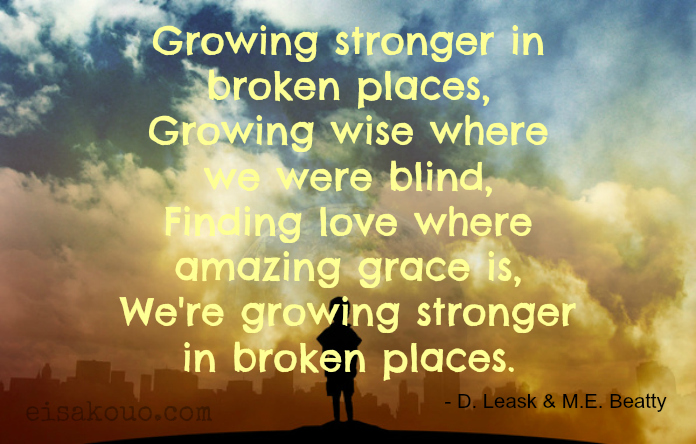
broken places


10 And He was teaching in one of the synagogues on the Sabbath. 11 And there was a woman who for eighteen years had a sickness caused by a spirit; and she was bent double, and could not straighten up at all. 12 When Jesus saw her, He called her over and said to her, “Woman, you are freed from your sickness.” 13 And He laid His hands on her; and immediately she was made erect again and began glorifying God. 14 But the synagogue official, indignant because Jesus had healed on the Sabbath… Luke 13:10-14


This story from Jesus’ life was really about two bent out of shape people. Obviously, we see the woman who was bent over double for eighteen years. But another person was bent-out-of-shape as well…a religious rules keeper. The length of his torment was unknown. Both were crippled and attending this fellowship. One was crippled by a spirit of weakness and the other was crippled by a spirit of legalism and bitterness. Jesus could only help the woman. The man continued on in his crooked condition.

Dr. Luke specifically informed us that this woman’s suffering was more than a “medical condition“.  Instead of employing a medical word to describe her problem, Luke used the phrase “crippled by a spirit.” Then in verse 12 Jesus also used the word “infirmity“.  It’s the word asthenia, which doesn’t mean “sickness caused by disease” but “weakness“.

When I was a kid, people used to refer to alcoholics as having a “weakness“. In other words, these otherwise strong people were weak when it came to alcohol. They were weak, when others were strong.

About 30-40 years ago, this all changed. Alcoholics were no longer considered “weak”. It was said they had a disease. This also helped because insurance started paying for their treatment. But, in one sense it is disease. The Bible says the sins of the father are passed down 3-4 generations. So, a disease it is. But, these same folks are weak as well.

It’s probable this woman’s weakness was caused by some demonic influence because Jesus says in verse 16 she had been “bound by Satan” for eighteen years. Demonic spirits can provoke physical problems, but not every illness or disease is caused by demons. There were twenty-six recorded miracles where Jesus healed someone of a physical problem and only seven of those were caused by demonic influence.

This particular encounter became a battle over truth. At some point eighteen years ago, a lying spirit had convinced this poor woman she couldn’t stand up straight any longer. From the language Luke used, it appeared she had no physiological cause for her affliction. When Jesus came along issuing “truth“, it became her opportunity to be set free from her affliction. All spiritual warfare starts in your mind. The mind is ground zero where most spiritual battles are won or lost. Praise the Lord – she believed Jesus’ words, after He touched her.

I know you may have heard this story before, but it fits well here. Have you ever seen a circus elephant tied to a small wooden stake outside a circus tent? The grown elephant could easily rip the wooden stake out of the ground. But when elephant handlers are training baby elephants, they use a strong, iron anchor bar and drive it deep into the ground. When the baby elephant tugs and tries to get away, he can’t do it.  He experiences the pain of the shackle on his leg. Eventually he gives up and stops pulling.

As the elephant grows, they replace the iron bar with a wooden stake. This is why the now grown elephant doesn’t pull away; he doesn’t think he can… so he can’t. It’s not the stake in the ground keeping him in place; it’s the thought in his mind that keeps him there. One of the devil’s greatest tools is to try to erect a stronghold in our mind to make us think we can’t do something God has told us to do.

I have a long list of lies about myself which I used to believe. These were all lies the demonic realm tried to use to keep me enslaved. I was no different than the baby elephant. It has taken a lot of scripture and revelation from heaven to pry the demonic junk out of my life. I don’t know of any growing believer who has not had to receive some kind of deliverance from the Lord. It is part of the process. The devil is a liar and the father of lies. It is the lies we continue to believe which enslaves us. It is only as we bring our brokenness to the Lord that He can heal us. We are who God says we are! It is only then that we can grow strong in broken places and truly minister to others.


Blessings,

Pastor


Share this:

  • More
  • Click to email a link to a friend (Opens in new window) Email
  • Pocket
  • Click to print (Opens in new window) Print
  • Tweet
  • Click to share on Reddit (Opens in new window) Reddit
  • Share on Tumblr
Like Loading...

Going to the Mountain

28 Monday Jan 2013

Posted by eisakouo in Luke

≈ 5 Comments

Tags

alone time, anything you bring to God is small, F B Meyer quote, G Campbell Morgan quote, Jesus, prayer, prayer is about our relationship to God, the importance of prayer, unoffered prayer, we need time alone with God


Unoffered prayer


There was a time in Jesus’ life when He went up a mountain to pray. What makes this experience different was that He chose to take Peter, James, and John along with Him. I am sure Jesus needed this “alone time” to pray. The disciples needed it. I am sure you and I need these times as well. Sometimes we are called away to pray and other times we choose to get away to pray. In either case, we can expect God to meet us in these places.

My point is this… If Jesus felt the need to get alone with the Father to pray, how much more should we set aside time to pray. Jesus knew that it was important to give His problems to the Heavenly Father, because anytime He faced a major decision, He was found praying. A lady once came to G. Campbell Morgan and told him, “I only take small things to God, because I don’t want to worry him with the big things.” Dr. Morgan replied, “Lady, anything you bring to God is small.”

You and I are never going to face a problem which God has not handled numerous times. Nothing we face is either too small or too big for God to answer. Prayer is always about our relationship to God, not our requests. Yes, it is our needs which drive us to pray more fervently .. but God answers because of our relationship. This is why Jesus was transfigured on the mountain.

Do you still view prayer as a vehicle to change God and your circumstances? Or, do you view prayer as God’s opportunity to change you? There is a difference and I will address this next time.


Blessings,

Pastor


Share this:

  • More
  • Click to email a link to a friend (Opens in new window) Email
  • Pocket
  • Click to print (Opens in new window) Print
  • Tweet
  • Click to share on Reddit (Opens in new window) Reddit
  • Share on Tumblr
Like Loading...

Four Portraits of the Blessed #1 Beware of Getting It All Now!

12 Friday Oct 2012

Posted by eisakouo in Portraits of the Blessed

≈ Leave a comment

Tags

1912 Summer Olympics in Stockholm, beatitudes, beware what you take from life, blessed life, deeper joys of the Kingdom, Good Samaritan, Jesus, Luke, Luke 6:20, Luke 6:24, Matthew, poor means pious, Proverbs 30:8-9, rich means self sufficient, Shizo Kanakuri, Sunday School teacher, the Kingdom of God is always now, you will pay for it in the long run


I am going to spend the next four blogs on the Beatitudes as recorded from Dr. Luke’s account. The good doctor only mentions four of these beatitudes, whereas Matthew records nine. Most believe both men were writing about the same sermon. It sounds like some of the people who have taken notes during my messages. I believe Luke was not simply abbreviating the sermon, but highlighting what he believed to be the four most important traits a disciple of Christ needs to possess. According to Luke, those who follow Jesus must operate under a set of values different from and often opposite of that of the world. Thus, the blessed life is not found in “getting” or from “doing”, but from “being.”

In Luke’s portrait of the blessed life he wants his readers to notice the good and bad, the right from the wrong. For each of the blessings there is a corresponding woe. These four woes all share a common truth … beware of what you take from life, you will pay for it in the long run. So these are not simply commands, but descriptions of what the life of the righteous should look like.

Imagine for a moment that I tell you “the righteous only drive 35 miles per hour.” “What!” You say, “I have the capability to cruise 70 mph and do so all the time.” I retort, “Yep, I know… but the righteous only go 35 mph.” I am not telling you that you have to always operate at 35 mph. I am telling you that the righteous only travel at 35 mph. You are simply given the choice to learn, listen from the Lord, and operate as He instructs. You don’t have to travel at His speed, but righteous people do.


Beware of Getting It All Now


20 “… Blessed are you poor For yours is the Kingdom of God”
24 “But woe to you who are rich, for you are receiving your comfort in full.”


A Sunday school teacher was telling her class the story of the Good Samaritan, in which a man was beaten, robbed, and left for dead. She described the situation in vivid detail so her students would catch the drama. Then she asked the class: “If you saw a person lying on the roadside, all wounded and bleeding, what would you do?”
A thoughtful little girl broke the hushed silence, “I think I’d throw up.”

You never know how someone is going to respond in any given situation until you are actually walking it out. The same is true of life. We really don’t know what it means to be “poor” or “rich” until we experience it. There is nothing innately righteous about being poor, nor is there any automatic evil in being rich. The poor are not automatically spiritual and the rich are not automatically evil. The writer of Proverbs states it perfectly.

“… Give me neither poverty nor riches—Feed me with the food allotted to me; (9) Lest I be full and deny You, And say, “Who is the LORD?” Or lest I be poor and steal, And profane the name of my God.” Proverbs 30:8-9


Riches and poverty can be a blessing or a curse. Jesus taught…. when a choice must be made between money and God, God must always come first.  “No one can serve two masters; for either he will hate the one and love the other, or else he will be loyal to the one and despise the other. You cannot serve God and mammon.” Matthew 6:24 When we fail to have our priorities in order… our circumstances, whether we are rich or poor, dictate our response. Money is not evil, unless it takes the place of God. This is why Jesus said, “It is the love of money which is at the root of all evil.“

Jesus follows this teaching of blessings on the poor a few verses later with a corresponding “woe” in verse twenty-four, “But woe to you who are rich, For you have received your consolation.” The word “woe” is an expression of dismay and regret, rather than a threat. Woe is meant to serve as a road sign like “yield” or “stop” what you’re doing. Jesus is expressing disappointment for the actions and attitudes of those who do not accept what the Kingdom of God offers. Listen to this modern paraphrase of this verse. (The Message) “It’s trouble ahead for those who think they have it made, What you have is all you’ll ever get.”

The Lord doesn’t want us to spend all of our resources totally on ourselves. This would be a waste or our time, talents, money, and abilities. This is what actually makes people poor…wasting their God-given resources on selfish pursuits.

Jesus is not blessing economic poverty or raising one social class above another. Matthew spiritualized the word “poor” by saying “poor in spirit”. This is how we usually quote this verse. “Poor” is actually “pious“, a religious term, not an economic word. The word for “pious” means, “those who depend absolutely on God.” Being pious has gotten a bad rap here in the modern era. But being pious is a good thing, especially as it relates to the Lord.

Luke wants his readers to compare these two words. Being pious stands in a juxtaposition to being rich, which means “self-sufficient.” Rich doesn’t necessarily have anything to do with amounts of money or accumulation of wealth. You are either (pious) God dependent or (rich) self-sufficient. If you are poor, you are trusting the Lord to reward you later. If you are rich, you are getting all your rewards now. It is usually easier to move towards God when you are poor, rather than when you are rich, because you don’t have to battle having riches or self-sufficiency.

The big blessing here… “the Kingdom of God is yours!” The meaning of “is” is always two-dimensional when speaking from the eternal point of view. It means “is now” and “will be” even more so in eternity. Jesus is saying that if one has this attitude now, he or she already is enjoying life in the kingdom or realm or atmosphere of God.

Shizo Kanakuri disappeared while running the marathon in the 1912 Summer Olympics in Stockholm. He was listed as a missing person in Sweden for 50 years — until a journalist found him living quietly in southern Japan.

Overcome with heat during the race, he had stopped at a garden party to drink orange juice, stayed for an hour, then took a train to a hotel and sailed home the next day, too ashamed to tell anyone he was leaving.

There’s a happy ending: In 1966, Kanakuri accepted an invitation to return to Stockholm and complete his run. His final time was 54 years, 8 months, 6 days, 8 hours, 32 minutes and 20.3 seconds — surely a record that will last forever.

I know a lot of believers who run from being “pious” and totally dismiss any assertion they are “rich”. They honestly look at this beatitude and struggle to apply it. The truth is the Lord wants to give us His Kingdom right now! The only way to discover the deeper joys of Kingdom life is to become God dependent and less self-sufficient. If we choose to disappear from the race like our friend from Japan and blend into crowd of mediocrity, we will lose our identity. The call is always to “seek His face while He can be found and call upon Him while He is near, because He cares for us.”

Blessings,

Pastor


Share this:

  • More
  • Click to email a link to a friend (Opens in new window) Email
  • Pocket
  • Click to print (Opens in new window) Print
  • Tweet
  • Click to share on Reddit (Opens in new window) Reddit
  • Share on Tumblr
Like Loading...
← Older posts
Newer posts →

Categories

  • Abraham: Life of Faith
  • Christmas
  • Daniel – No Compromise
  • Discipletips
  • Dying to Self
  • Holidays and Special Events
  • How God Creates a Man or Woman He Can Use
  • How to Receive an Answer from God
  • Humor/Reaping and Sowing
  • Illustrations/Cartoons/Etc.
  • Kingdom of God
  • Living In Uncertain Times
  • Luke
  • News/Hot Topics
  • Our Journey Into The Promised Land
  • Our Spiritual Process
  • Portraits of the Blessed
  • Quotes
  • Receiving Revelation
  • Servanthood
  • The Lord's Return
  • The Strange & Unusual Voice of God
  • Times of Testing
  • Uncategorized
  • When the Holy Spirit Comes

Enter your email address to follow this blog and receive notifications of new posts by email.

Join 235 other subscribers
  • Unknown's avatar
  • Unknown's avatar
  • Unknown's avatar
  • Unknown's avatar
  • Unknown's avatar
  • Unknown's avatar
  • Gabriel's avatar
  • Unknown's avatar
  • Rad change's avatar
  • betternotbroken's avatar

Archives

Blog Stats

  • 261,185 hits

Eisakouo

Eisakouo

Enter your email address to follow this blog and receive notifications of new posts by email.

Top Rated

Blog at WordPress.com.

  • Subscribe Subscribed
    • eisakouo
    • Join 177 other subscribers
    • Already have a WordPress.com account? Log in now.
    • eisakouo
    • Subscribe Subscribed
    • Sign up
    • Log in
    • Report this content
    • View site in Reader
    • Manage subscriptions
    • Collapse this bar
 

Loading Comments...
 

    %d